



Silver Jewelry Source | Silver Jewelery?

Silver Talk…

Archive for the ‘silver jewelry’ tag

Six common questions about sterling silver jewelry

without comments

Sterling silver jewelry has been a popular commodity for thousands of years. One of the obvious reasons is the affordability over other precious metals gold and platinum. The large variety of sterling silver jewelry requires certain knowledge in order to choose the right piece and also keep it in good condition as long as possible. The followings are the most common questions concerning sterling silver jewelry.

How do I clean sterling silver jewelry?

It depends. Usually, it is sufficient to use a jewelry cloth (with two layers of cloths in different colors) that you can get from a jewelry accessory store. Don’t use any hard object to clean sterling silver jewelry; even paper towel could scratch the surface. You should rub any dirt off using a jewelry cloth, not fingernails. Silver-dip is another commonly used sterling silver jewelry cleaner, which can also be obtained from jewelry store. The entire silver jewelry is immerged in the solution for half a minute to a minute and then rinsed with water. Make sure the silver jewelry is not plated with any other metal before using the silver-dip or the plating will be damaged.

Where do I store sterling silver jewelry?

It is very important to store sterling silver jewelry properly when it is not used. The ideal place to store sterling silver jewelry is cool and away from sunlight. Heat and light will turn a silver jewelry yellow and cause it to tarnish quickly. Even indoor light source like florescent lights or light bulbs turn the color of silver jewelry over time. If you expect not to wear a certain piece for a long time, put it in a air-tight bag and store it in a drawer.

What types of silver jewelry plating are there?

Unlike gold and platinum, however, pure silver is rather unstable and oxides rather quickly. Therefore, silver jewelry is usually plated with another metal to protect it from tarnishing. There are two kinds of plating for silver jewelry: nickel and rhodium plating. Nickel plating has a more whitish look and rhodium plating has a darker look. Rhodium is used to plate white gold and platinum jewelry and is much more expensive than nickel, and it give better protection to the silver underneath. On the other hand, some silver jewelry is not plated. For instance, high polished sterling silver jewelry does not have any plating and the surface is polished by machine to render shininess. Also, “oxidized silver” jewelry is oxidized on purpose to give a dark antique look and is not plated with any other metals.

How do I know the purity of my silver jewelry?

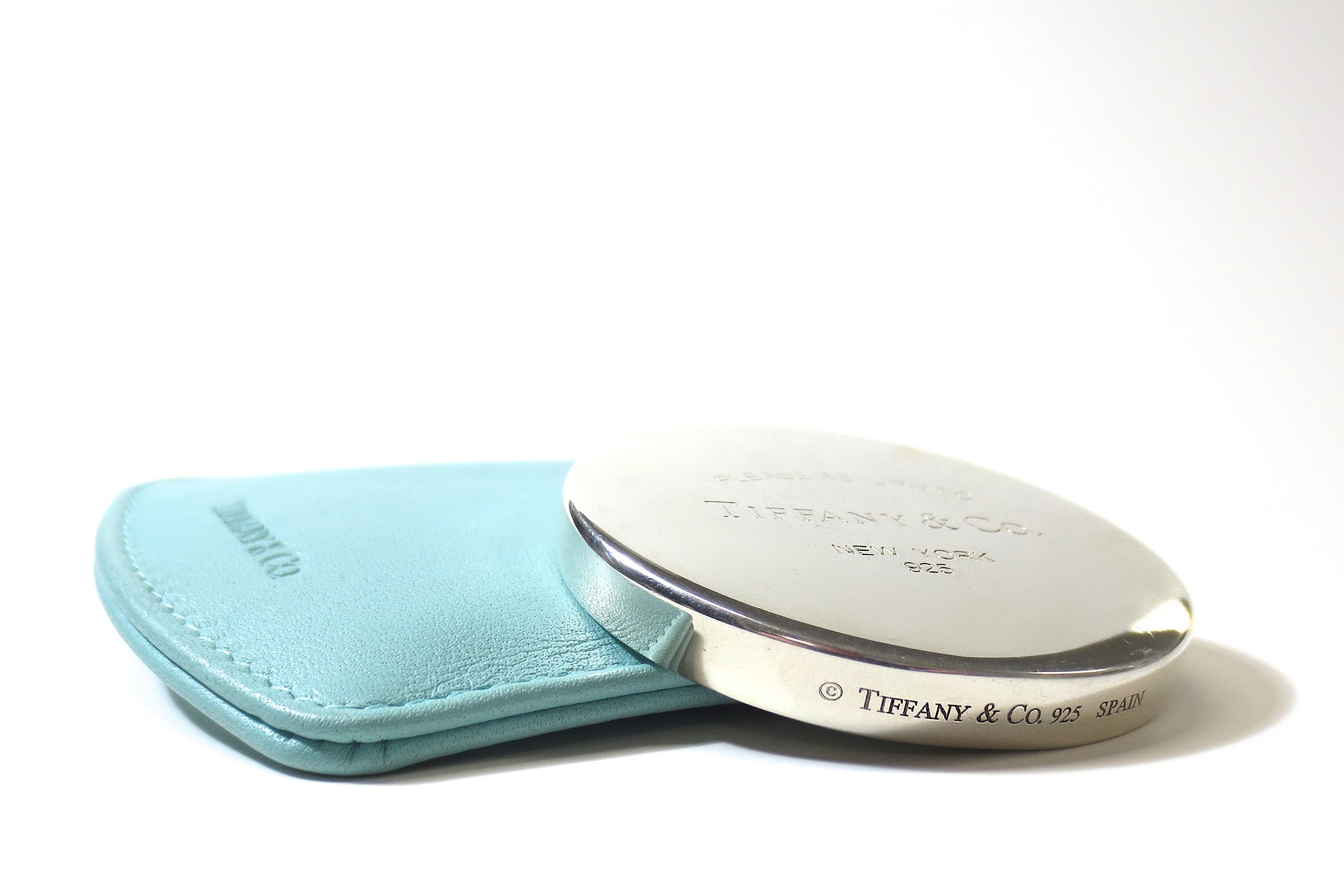
The purity of sterling silver refers to 92.5% of silver in the alloy. In order to confirm the purity, the metal itself has to be sent to a laboratory to be tested. However, most of the sterling silver jewelry produced nowadays has a “925″ stamp to indicate the authenticity of the jewelry. Although there are cases where stamps are forged and the metal is either not silver or the purity is not as stated, they are very rare.

How about engraving and resizing?

Engraving and resizing of sterling silver rings is rather simple due to the ductility and relatively low melting point. However, make sure your jeweler understands the process of refinishing the ring and that they possess the necessary equipment to do so. Not all jewelers have the equipment to recoat the rhodium plating after cutting and welding the ring. Also, rings set with stones are sometimes not resizable because resizing might cause the stones to pop out. Such settings include channel and invisible settings.

Can I wear sterling silver jewelry if I am allergic to nickel?

Yes, just make sure the jewelry is pure sterling silver, not plated with nickel. Even Rhodium plated sterling silver jewelry sometimes contains a nickel layer between the silver and the rhodium to act as an adhesive. Hence, buy only high polished sterling silver jewelry if you are allergic to nickel.

By: Greg Peterson

About the Author:

Greg Peterson got his MBA from MIT business school and is now working as marketing manager for jewelry businesses featuring wholesale sterling silver jewelry and wholesale hip hop jewelry.

Written by silverman

June 1st, 2008 at 7:39 pm

Posted in Silver Jewelry QA

Tagged with

Colloidal Silver Facts

without comments

M.D. Hamilton asked:

Colloidal silver facts abound, but misinformation about colloidal silver facts is also plentiful. Our purpose here is to provide three colloidal silver facts, coupled with warnings.

Products sold under the general label “colloidal silver” may actually be any one of three distinct products:

- Ionic silver

- Silver protein

- True colloidal silver

Colloidal Silver Fact - Ionic Silver

Most products labeled and sold as colloidal silver are, unfortunately, ionic silver. This is because it is so much easier and less costly to produce this type of silver product. Among misrepresented colloidal silver facts, this is perhaps the most common.

Ionic silver products are made up of silver ions and silver particles. Using electrolysis, the manufacturer produces silver ions. Silver ions are really dissolved silver. Because most of the silver (about 90%) in ionic silver products is dissolved silver instead of silver particles, these are really solutions of silver.

These products are frequently advertised as containing silver ions that are small silver particles. That is confusing, however, since silver ions are different from silver particles.

Silver ions combine with chloride ions to form silver chloride, but silver particles do not.

Some manufacturers hide the identity of their ionic silver behind terms such as monatomic silver and silver hydrosol. These names are used to hide the truth from you. You are getting an ionic silver solution, not colloidal silver.

DON’T BE FOOLED.

If the product is clear, like water with sugar dissolved in it, it is ionic silver, not colloidal silver. Colloidal silver has an apparent color. This is a colloidal silver fact.

HOW TO TEST IT.

Add table salt to the product. If silver ions are present, the solution should turn cloudy. If it remains clear, however, it may simply mean no silver is present at all. Unfortunately, lab analysis has shown that some “silver” products contain absolutely no silver.

Some Products that test out to be ionic silver:

- Alchemists Workshop Colloidal Silver 10 ppm

- Earth’s Bounty Colloidal Silver 5 ppm

- Earthborn Products Colloidal Silver 100 ppm

- High Energy Labs Colloidal Silver 15 ppm

- Pro Star Colloidal Silver 10 ppm

- Survival Enterprises Colloidal Silver 3 ppm

- Ultra Pure Colloidal Silver 35 ppm

Colloidal Silver Fact - Silver Protein

Silver protein products, though often called colloidal silver, are nothing more than silver particles combined with protein. They can be made easily and at little cost. One needs only to add water to silver protein powder. The powder is sold by many chemical companies. This is the second most commonly misunderstood of colloidal silver facts.

If the colloidal silver product you are considering claims to be a high concentration of colloidal silver, it is very likely silver protein. Silver protein products usually have large silver particles. They could not remain suspended unless protein was added. Protein helps keep the particles from settling.

What kind of protein is used? Usually, it is gelatin made from animals. The risk of bacteria from the gelatin is one of the dangers of taking silver protein products.

DON’T BE FOOLED.

Silver protein products are the least effective for human use. In addition, silver protein products are known to cause Argyria - bluish skin tone. The condition is due to the high concentration of large silver particles. This is a colloidal silver fact.

HOW TO TEST IT.

Shake the product. If foam appears above the liquid and remains a few minutes, you probably do not have a colloidal silver product.

Some Products that test out to be silver protein:

- Futurebiotics Advanced Colloidal Silver 10 ppm

- Innovative Natural Products - Super Colloidal Silver 2000 ppm

- International Pharmaceuticals - Invive 500 ppm

- N-Ergetics Colloidal Silver 1100 ppm

Colloidal Silver Facts - True Colloidal Silver

These products are the most difficult to find, but are the products you want if you are going to use colloidal silver. True colloidal silver products present both difficulties and high cost to the manufacturer. Those who want you to misunderstand this colloidal silver fact want to make money from inferior products.

A colloid is a combination of particles of one substance, dispersed throughout another substance, which are too small to be seen with an ordinary light microscope, but cannot pass through a semipermeable membrane.

When referring to colloidal silver, the word colloid means silver particles. True colloidal silver contains mostly silver particles. True colloidal silver will usually contain 50 to 80% silver particles. The remainder will be silver ions.

True colloidal silver products have the highest total surface area of all the particles taken together. This is important. High surface area determines how effective the colloidal silver will be. The extremely small particles in true silver colloids, with their high surface area, remain in colloidal suspension on their own. There is no need to add protein or other substances.

DON’T BE FOOLED.

True silver colloids do not cause Argyria, the condition that causes skin to turn blue-gray. Their freedom from this condition is due to the low amount of ionic silver and the small size of the silver particles. This is a colloidal silver fact.

HOW TO TEST IT.

Look for an apparent color. Add salt, as described above under “Ionic Silver”. Shake as described under “Silver Protein”. True colloidal silver should pass all three tests.

Some Products that test out to be true colloidal silver:

- Advanced Colloidal Silver (Utopia Silver) 20 ppm

- Kelly Colloidal Silver 20 ppm

- Mesosilver 20 ppm

- Vitol Super Colloidal Silver 5 ppm

- Wellness Colloidal Silver 30 ppm

Whichever product you finally purchase, be sure to check with your health-care provider before using it. Be sure you share with him or her the colloidal silver facts learned here.

Written by silverman

January 16th, 2008 at 9:11 pm

Posted in Medicine, Silver Jewelry QA

Tagged with